
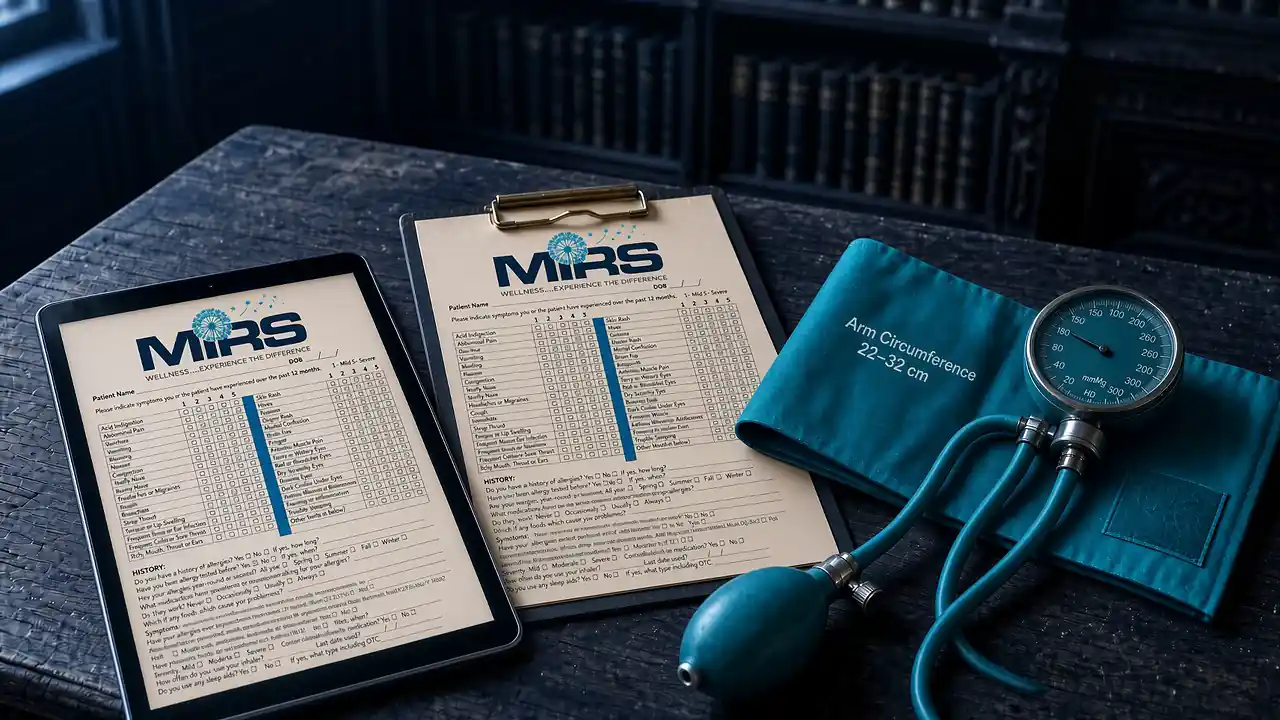
Allergy Is Chronic: Addressing It Requires a Program
To the extent that primary care physicians give any thought to allergy from either a medical or business perspective, there is often a tendency to think of it as an event instead of a process, a single-use product like a strep test rather than a recurring regimen like hypertension detection and management. That perspective, while understandable, is incorrect. In reality, allergy needs to be a comprehensive program, and to be optimally effective and sustainable, it usually needs to be a true turnkey allergy program. The error in thinking of allergy as a product, or single event, disserves both the patient and the clinic. Properly conceived and executed, allergy testing as a service line is strongly analogous to hypertension—it’s one of the most prevalent medical conditions there is; it’s chronic; it’s most commonly detected by routine screening not acute observation; and diagnosis and management is a matter of years, not a single visit. In short, allergy should be thought of as a program that benefits the practice as much as the patients.

| Allergy | Hypertension |
|---|---|
| Highly prevalent | Highly prevalent |
| Chronic | Chronic |
| Detected by routine screening | Detected by routine screening |
| Managed over years | Managed over years |
| Best handled in primary care | Best handled in primary care |
Allergy Diagnosis, Let Alone Years of Treatment, Is Not a Single Transaction
Assume for the sake of argument that allergy diagnosis was a single event like a strep test or reflex check. How did the need for that test arise? If it’s only because the patient asked for it, whether explicitly or only indirectly by seeking help for some symptom set, then it’s quite clear that most allergy patients are getting missed. The same is true if the provider decides to test based on indications regardless of patient request. Instead, all patients should be screened for allergy symptoms by survey upon intake and annually, just as they’re screened for blood pressure and weight changes on every visit.
Now assume instead that every patient is in fact surveyed for allergy. That survey itself entails a process, and of course if the survey indicates allergy testing is appropriate, additional process and protocol follows. Like any process, the allergy survey process leading to testing is subject to breakdown at a minimum of four separate, critical junctures. That survey process is a subject unto itself. For present purposes, it will suffice to observe that the whole process is easy, and the potential break points are likewise easy to address, but it is crucial to realize it is, in fact, a process.
An allergy test is not at all like a strep test, which is a product used when a given symptom set is observed. An allergy test is the result of a process that begins at the front desk or even on a mobile phone when a patient first makes contact, and might not end until four years later during a long and fruitful relationship with your clinic.
The Allergy Process Is a Great Fit for Primary Care
Once it’s understood that proper allergy care is a comprehensive program, requiring universal screening, diagnosis, and years of treatment including monitoring, it becomes obvious that it belongs in primary care, not specialty clinics. The exception is that it is also a great fit for specialty clinics like ophthalmology, otolaryngology, and sleep, where differential diagnosis is critical and patients have long-term relationships with providers.
Primary care clinics are best positioned to screen each patient once a year. When a screening detects a medical necessity for allergy testing, primary care clinics are in a great position to provide that test right there in-house. After all, it takes only a couple of hours by teleconference to train MAs to do the test in 20 minutes. Then, primary care clinics are best positioned to monitor whether patients are keeping up with their treatment protocols.
Consider that allergy is an extremely prevalent chronic condition that should be one of the top ten reasons patients visit their primary care providers, and the conclusion is inescapable. Allergy belongs in primary care.
Why Allergy Is So Misunderstood: Poor Education and Worse Services
If it’s so obvious to the enlightened, how did allergy get so badly misunderstood and relegated to the domain of immunology specialists as a best-case scenario? Worst case, which is more common than is comfortable to contemplate, allergy is just completely ignored. There are at least two big reasons for that.
First, allergy doesn’t get much attention in medical school, and even less in residency. Medical students tend to get a few weeks on immunology. In residency, allergy is not required except in related specialties. Thus, allergy as an afterthought becomes a circular tautology and patients get disserved: nobody thinks about it because nobody thinks about it, despite the shockingly high prevalence of suffering.
Second, the allergy service industry has served the need poorly in the past. A moment’s reflection will reveal that an allergy program requires certain materials at a minimum, plus training and support for sustainability and excellence, so typical primary care clinics can’t just conjure an allergy program out of thin air. They need a supplier of some kind. Sadly, allergy suppliers historically have not done a great job.
Suppliers instead clustered around the extreme ends of a spectrum. Materials-only occupied one end, where primary care clinics are expected to buy the allergens and applicators and such, and then just figure it out on their own. Perhaps needless to say, that doesn’t work very well most of the time.
Clinic invasion occupies the other end of the spectrum of allergy program models. In that model, which likely arose because of the extraordinarily compelling business case involving high reimbursements compared to costs, a third-party technician occupies a treatment room and conducts allergy testing on a clinic’s behalf. That model has a lot of disadvantages, not least questionable legality in corporate practice of medicine (CPM) states, where those laws prohibit certain allergy service providers from doing business.
With only poor suppliers to choose from, it’s probably a credit to primary care providers as a whole that allergy programs have not been prevalent in the past. With MRS Allergy as a true turnkey allergy program supplier, PCPs can run their own allergy programs smoothly, professionally, and profitably. The days of failing to meet a gaping shortfall in services patients need should be at an end.
Breaking the Cycle Serves Patients and Providers Alike
The problem is big and real, and the solution is at hand in the form of an evolved, truly turnkey, easy allergy program supplier. Patients and their primary care providers both stand to benefit. Patients get the detection, diagnosis, and treatment they need and simply are not getting. Providers not only get to serve that need, they get a new service line: a comprehensive allergy program that provides a healthy boost to the bottom line.
Breaking the cycle to serve patients better starts with evaluating a modern allergy testing as a service model for your practice. Understand the patient need first, then the business case, then the process. Armed with that information, decisions can be made quickly.